
Helping you deal with the effects of being in a relationship with a Narcissist by finding positivity and confidence in who you are. To help you recognise Narcissistic traits within yourself.
A relationship with a Narcissist has been compared to dating the proverbial Jekyll and Hyde. One moment filling you with immense highs, the next extreme lows.
The majority of us enter into relationships for love. We have the need to connect and form a bond with another person. Narcissists get into relationships for entirely different reasons. They do not feel love and they lack the ability to connect and form normal attachment bonds with others.
Coping with a narcissistic Relationship.
Narcissists need people more than anyone.
This is because their entire sense of self-esteem and self-worth is dependent on the admiration of others. Their emotions are a precarious balance of needing others and needing to be left alone.
If you feel you may have Narcissistic traits or are dating someone who exhibits the behaviours, then please see below for information and resources.



Websites Offering Support:

Helpguide.org
Are you in a frustrating relationship with someone who expects constant attention and admiration, but doesn’t seem able to take your needs and feelings into consideration? Someone who thinks they’re better than everyone else and should be treated accordingly? Who dishes out insults and condescension, but flies off the handle at the slightest disagreement or whiff of criticism? If so, you may be dealing with a narcissist. Learn what you need to know about narcissistic personality disorder (NPD) so you can spot the narcissists in your life, protect yourself from their power plays, and establish healthier boundaries.

Counselling Directory
If you feel you may have some Narcissistic tendencies and would like to seek some advice the Counselling Directory is a great resource.
Books on this subject:
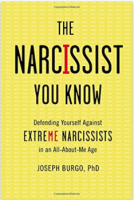
The Narcissist You Know
In the tradition of The Sociopath Next Door, clinical psychologist Joseph Burgo’s The Narcissist You Know is a guide to help you identify, disarm, and coexist with extreme narcissists. In today’s social media and selfie-obsessed culture, we are living in an age of narcissism—and a society that often celebrates this potentially harmful trait rather than understanding it as a psychological disorder.
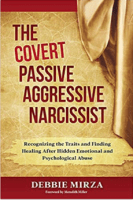
The Covert Passive-Aggressive Narcissist: Recognizing the Traits and Finding Healing After Hidden Emotional and Psychological Abuse
Do you feel confused and exhausted by a relationship, and you can’t figure out why?
Do you feel like you can’t think straight, and the person in your life seems fine, so you wonder if maybe you are the problem?
Has someone mentioned you might be with a narcissist, or you wonder yourself, and when you research narcissism, they don’t seem to completely fit the description, although some of the traits do ring true?
You will see that you are not crazy, that your instincts are correct, and you will learn how to see through covert manipulation and control.
The most common description a survivor of this type of relationship will use is crazy-making. The emotional abuse and gaslighting makes you question your own view of reality, and sometimes your own sanity. You will know after reading this book if the person you are with is a covert narcissist, and your experience with them will begin to make sense for the first time.
This type of narcissism is one of the most damaging forms because the abuse is so hidden and so insidious. You can be in a relationship with a covert narcissist that can last for decades and not realize you are being psychologically and emotionally controlled, manipulated, and abused. There are no visible scars with this form of abuse, and you are usually the only one that experiences their destructive and psychologically debilitating behavior.
Living with a covert narcissist drains your spirit and leaves you questioning your own reality.
You have been lied to for years, and it is time to finally see the truth of what you have been through, who you really are, and how much you deserve love and happiness.
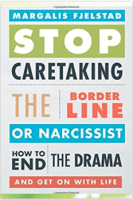
Stop Caretaking the Borderline or Narcissist: How to End the Drama and Get On with Life
People with Borderline or Narcissistic Personality Disorders are master manipulators; Caretakers fall for them every time. This book helps Caretakers break the cycle and puts them on a new path of personal freedom, discovery, and self-awareness, through the use of real stories and practical suggestions from a seasoned therapist.
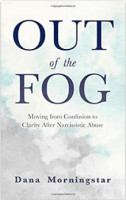
Out of the Fog
Some of the concepts covered are:
Who are You to Judge vs. Being Discerning
No One is Perfect vs. Tolerating Abuse
You Need to Forgive Them vs. Keeping Yourself Safe
A Parent vs. A Predator
Commitment vs. Codependency
Self-love vs. Selfishness
A Person Acting the Part vs. A Person Actually Changing
Gut Instincts vs. Hypervigilance
A Friend vs. Someone Being Friendly
Caring vs. Caretaking
Being in Love With Them vs. Being in Love With Who They Pretended to Be
Workable Behavior vs. Deal Breakers
Acceptance vs. Allowance
Going Through So Much Together vs. Being Put Through So Much By Them
Sincerity vs. Intensity
Healthy Bonding vs. Trauma Bonding
Insincere Remorse vs. Sincere Remorse
Reacting vs. Responding

Codependent No More: How to Stop Controlling Others and Start Caring for Yourself
In the June 29th issue of Newsweek magazine Dr. Drew Pinsky named Melody Beattie’s Codependent No More one of the four essential self-help books available today, calling it the granddaddy of addiction tomes. Is someone else’s problem your problem? If, like so many others, you’ve lost sight of your own life in the drama of tending to someone else’s, you may be codependent – -and you may find yourself in this book — Codependent No More.
The healing touchstone of millions, this modern classic by one of America’s best-loved and most inspirational authors holds the key to understanding codependency and to unlocking its stultifying hold on your life. With instructive life stories, personal reflections, exercises, and self-tests, Codependent No More is a simple, straightforward, readable map of the perplexing world of codependency — charting the path to freedom and a lifetime of healing, hope, and happiness.
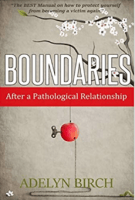
Boundaries After a Pathological Relationship
If you were involved in a pathological relationship — or you want to prevent it from happening in the first place — this book is for you. It gets to the heart of the matter of personal boundaries. Identifying and setting clear boundaries is vital for survivors and for anyone who wants to become more confident, improve relationships, and prevent victimization.
When you create boundaries you take a stand for yourself and your life, and you communicate your worth to others in a real and practical way. This concise and powerful book is filled with practical wisdom and useful tips. It will walk you through the process of creating boundaries from start to finish.
You get to decide how you want to live. Find your courage. Live in an authentic way. Protect yourself and what’s important to you. Gain self respect and the respect of others. Boundaries will help you do all of these things.