
Providing support for individuals navigating a new phase of life as a widow.
Facing the loss of a spouse is a journey many of us will encounter. As women generally live longer than men, you may find yourself in the majority facing this transition. The term "widow" often carries associations of sorrow and loneliness, but it doesn't mean you have to live the rest of your life in misery.
While the tremendous loss and sorrow may be overwhelming, it's important to embrace the mindset of seeking joy in this next stage of life. Remember that it's okay to feel the way you do, and acknowledging your pain is part of the healing process. As Megan Devine eloquently puts it, "It's okay that you're not okay."
You don't have to go through this journey alone. Surround yourself with supportive people who can offer companionship and understanding. Time plays a significant role in healing, and having individuals to talk to about your feelings is an essential part of the recovery process. There are numerous support groups available to provide assistance during this challenging time, recognising that everyone grieves and recovers at their own pace.
Moving forward doesn't mean forgetting your loved one; it signifies a new chapter in life where you can honor their memory while embracing your own journey. Though they will always hold a place in your heart, it's important to find a new lease of life, nurturing yourself and gradually coming to terms with the changes.


Websites Offering Support:
Widowed in Need
is a small charity created by a group of widowed people with the aim of supporting widows and widowers in financial distress.

Way Up
is an active self help group aimed at providing mutual support to those widowed their 50’s and 60’s. They are based in the UK but are open to members from all over the world.
It is a group with a positive forward looking attitude to rebuilding lives and discovering that our lives can be good again, that we can be happy once more.

Turn2us
includes information, if you are recently bereaved, on how to find out if there are benefits, grants or other financial support available to you. In most cases, the help from bereavement benefits assumes you lost your partner within the last 12 months.

Reengage

Jolly Dollies
is a social network for widows.

Good Grief Trust
exists to help all those suffering grief in the UK. They aim to find the bereaved, acknowledge their grief and provide reassurance, a virtual hand of friendship and ongoing support. There is a map feature to help you find local support groups and charities as well as a wealth of advice.
They also include a Well-Being page, where you will find healing stories and tips on books and poetry, aimed to support you, and help you find alternative ways of coping with your grief. When you go through a life altering event, remembering to look after your self-care and well-being can fall to the wayside. It is through creating the space to nurture & soothe yourself that the courage and resilience that resides within us can flourish and grow.

Cruse
is there to support you after the death of someone close.

At a Loss
helps you find appropriate and local bereavement support via their signposting website.

Age UK
provides companionship, advice and support for older people who need it most.
There is a section dedicated to combating loneliness and lots of other sections offering help and advice on a broad range of topics related to older people.
Books on this subject:
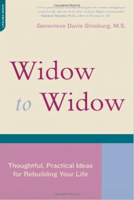
Widow To Widow: Thoughtful, Practical Ideas For Rebuilding Your Life
In this remarkably useful guide, widow, author, and therapist Genevieve Davis Ginsburg offers fellow widows-as well as their family and friends-sage advice for coping with the loss of a husband. From learning to travel and eat alone to creating new routines to surviving the holidays and anniversaries that reopen emotional wounds, Widow to Widow walks readers through the challenges of widowhood and encourages them on their path to building a new life.


On Grief and Grieving: Finding the Meaning of Grief Through the Five Stages
One of the most important psychological studies of the late twentieth century,OnDeath and Dyinggrew out of Dr. Elisabeth Kubler-Ross’s famous interdisciplinary seminar on death, life and transition. In this remarkable book, Dr. Kubler-Ross first explores the now-famous stages of death: denial and isolation, anger, bargaining, depression and acceptance. Through sample interviews and conversations, she gives the reader a better understanding of how imminent death affects the patient, the professionals who serve that patient, and the patient’s family, bringing hope to all who are involved. This new edition will include an introduction by Dr. Ira Byock, a prominent palliative care physican and the author of Dying Well.

Mars and Venus: Starting Over
Many reasons relationships end. Millions of people are widowed, breakup with their long-term partner or get divorced every year. There is hope. The healing period after such a loss can be difficult, but getting over the grief, anger and pain of a breakup can be much easier with expert help. Relationship expert, John Gray, offers empowering advice on how to overcome loss and gain the confidence to meet new people and engage in new relationships.


It’s Ok That You’re Not Ok: Meeting Grief and Loss in a Culture That Doesn’t Understand
In 2009, on a beautiful sunny day, Megan Devine witnessed the accidental drowning of her beloved partner Matt. “All my professional experience as a therapist felt meaningless,” she writes. “Grief literature is loaded with well-intended advice that can actually worsen and extend someone’s pain. We just don’t know how to handle loss in our culture.” Megan has dedicated herself to helping people find a new way to deal with loss that honors our experience without trying to “solve” grief.
With It’s OK That You’re Not OK, Megan reveals a path for navigating grief and loss not by trying to escape it, but by learning to live inside of it with more grace and strength. Through stories, research, life tips, and mindfulness-based practices, she offers a unique guide through an experience we all must face. Here she debunks the culturally prescribed goal of returning to a normal, “happy” life, replacing it with the skills and tools to help us experience and witness the pain of loss in ourselves and others–so we may meet our grief knowing it to be a natural step in the greater journey of love.


If There’s Anything I Can Do…: How to Help Someone Who Has Been Bereaved
Based on dozens of interviews with people who have lost their partner, this book tells what helped them and what upset them. For everyone who is close to someone who has lost a partner, this book advises on how to give the best possible support. It includes tips and guidance on what to say and what to do, what not to say and do, to help your friend cope a little better with their grief.


Finding Meaning: The Sixth Stage of Grief Paperback
David Kessler – the world’s foremost expert on grief and the coauthor with Elisabeth Kübler-Ross of the iconic On Grief and Grieving – journeys beyond the classic five stages to discover a sixth stage: meaning.
David has spent decades teaching about end of life, trauma and grief. And yet his life was upended by the sudden death of his twenty-one-year-old son. How does the grief expert handle such a devastating loss?
In Finding Meaning, Kessler shares his hard-earned wisdom and offers a roadmap to remembering those who have died with more love than pain, how to move forward in a way that honours our loved ones and ultimately transform grief into a more peaceful and hopeful experience.
An inspiring must-read for anyone struggling to figure out how to live after loss.